
I lead the architecture and implementation of a unified enterprise platform supporting 200+ annual events and 30+ partner organizations, aligning fragmented web platforms, operational workflows, and enterprise data into a single scalable system.
Unified Enterprise Platform
Role: Product Architect / Platform Strategy Lead
Responsibilities included:
• Enterprise platform architecture
• Salesforce system design and customization
• Web platform integration strategy
• Data architecture and operational workflows
• Governance and knowledge management infrastructure
Platform Alignment & Enterprise Modernization
Client: Drum Corps International
Industry: Sports, Media & Performing Arts
Platforms: Web (dci.org, drumlinebattle, soundsport, intranet), Custom Salesforce Enterprise System
Scale: 200+ annual events · 30+ partner organizations
Objective: Design and implement a unified enterprise solution to replace fragmented legacy systems, centralize operational data, and support the growing logistical and governance complexity of a global performing arts organization.
The Problem
Drum Corps International operated across a fragmented digital ecosystem composed of disconnected websites, spreadsheets, and manual operational workflows.
As the organization expanded its event footprint and partner network, these disconnected systems created operational inefficiencies, inconsistent data management, and limited visibility across the organization. This included:
• a legacy informational website
• multiple ancillary websites supporting different organizational functions
• siloed operational data across departments
• manual and fragmented contracting workflows
• limited integration between web platforms and internal operations systems
The challenge wasn’t simply modernizing individual websites.
It was aligning a rapidly growing operational ecosystem across events, partners, and internal teams into a unified platform architecture.
Problem Overview
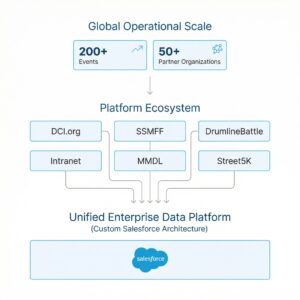
Platform Scale
As Drum Corps International expanded its event footprint and partner network, the digital ecosystem grew increasingly complex.
The organization was responsible for coordinating:
• 200+ annual events
• 30+ partner organizations
• multiple public web platforms
• internal operational workflows across departments
Without a unified architecture, operational data and public-facing systems became increasingly difficult to synchronize. This scale made fragmentation unsustainable.
Operational Capabilities Required
The architecture needed to unify:
• event operations management and scheduling
• vendor and partner coordination
• contracting and licensing workflows
• governance documentation and knowledge management
• public-facing information platforms
• operational reporting and analytics
These capabilities were previously distributed across disconnected tools and manual workflows.
A unified architecture needed to bring them together into a single operational system.
The Solution
To address the fragmentation across web platforms, operational systems, and contracting workflows, the initiative focused on designing a unified enterprise platform architecture that could support both public-facing experiences and internal operations.
The solution centered on three key components.
1. Data-Driven Web Infrastructure
Public-facing platforms were redesigned to dynamically integrate with operational systems, replacing static websites with data-driven applications capable of synchronizing event schedules, organizational updates, and partner information.
2. Enterprise Operations Platform
A custom Salesforce enterprise system was designed to serve as the organization’s centralized operational platform, managing event logistics, vendor coordination, licensing workflows, governance documentation, and internal reporting.
3. Platform Integration Architecture
A structured integration layer was established to connect the web platform with the Salesforce enterprise system, allowing operational data to flow between internal systems and public-facing experiences.
This architecture enabled:
• centralized event and organizational data management
• synchronized updates between operational and public systems
• improved reporting and operational transparency
• a scalable foundation for future digital initiatives
The final architecture unified public platforms, internal operational systems, and partner collaboration tools into a single integrated ecosystem powered by Salesforce.
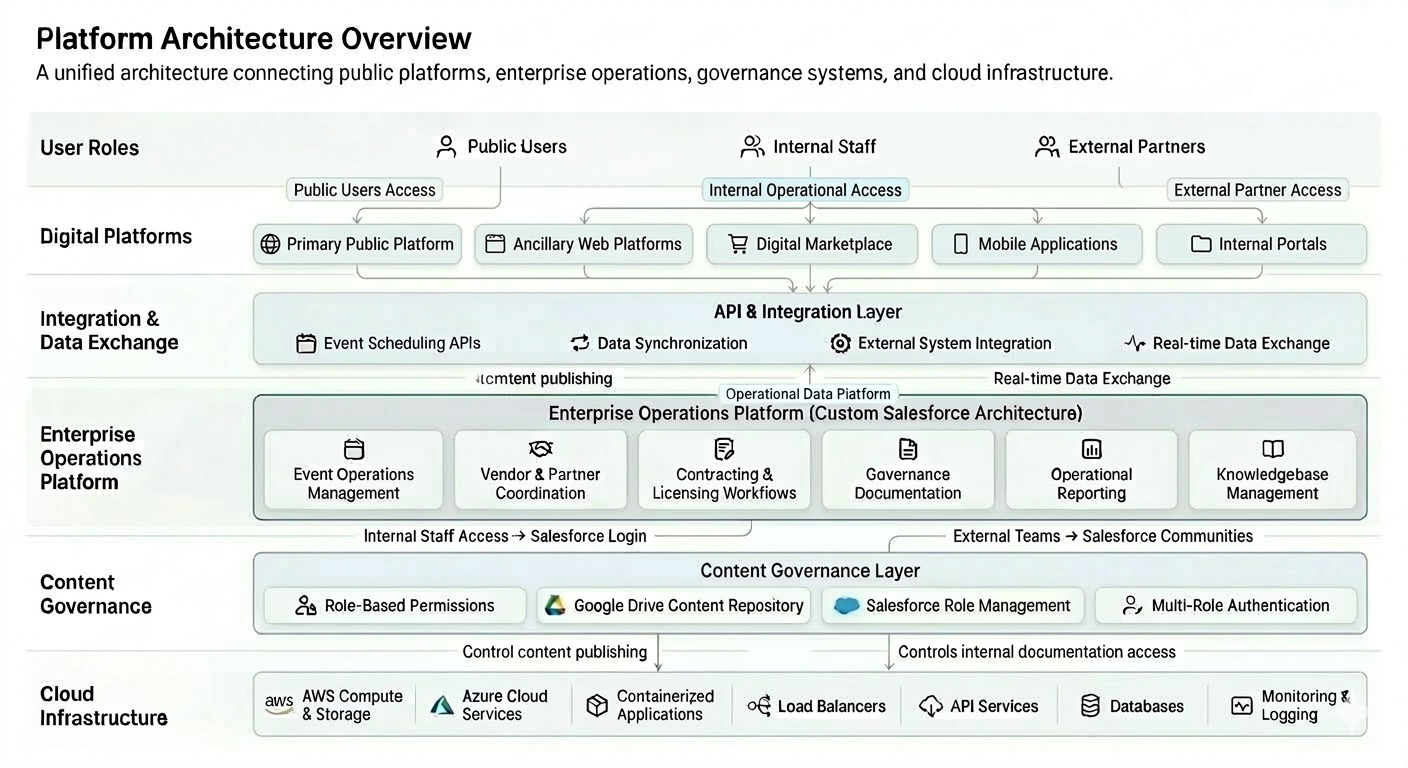
Platform Ecosystem
The unified architecture connected multiple digital properties into a cohesive ecosystem:
Primary platform:
• DCI.org
Supporting platforms:
• Drumline Battle
• SSMFF
• Street5K
• Internal Intranet
All platforms integrate with the central Salesforce enterprise system.
Architectural Principles
The platform was designed around several key principles:
• centralized operational data
• platform-driven public experiences
• role-based governance and access control
• scalable integration architecture
• separation between experience platforms and operational systems
The architecture also introduced a governance framework that integrated Salesforce role management with a structured Google Drive content repository, enabling secure multi-role access to operational documentation across internal teams and partners.
Outcome
The unified platform architecture aligned public digital experiences with internal operational infrastructure, enabling Drum Corps International to scale event coordination, partner collaboration, and digital engagement across a global performing arts networ